Cream Dresser Vanity With Double White Vessel Sink
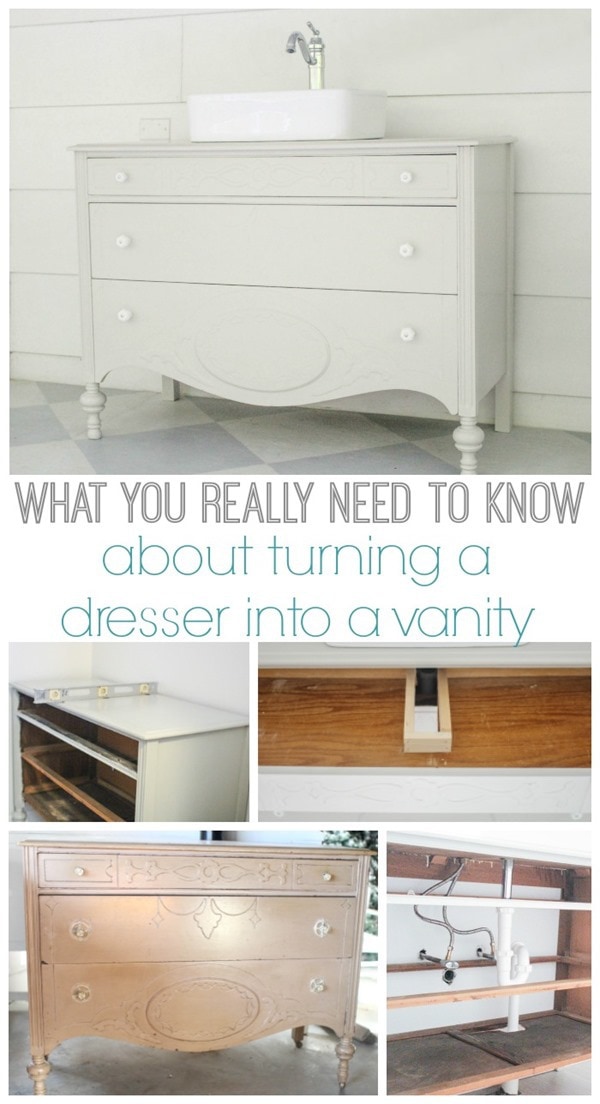
A few weeks ago, I shared the basics of how to makea vintage dresser into a bathroom vanity. When I first decided I wanted to tackle this project, I had no idea what I was in for. I imagined I would paint the dresser, add a sink and a faucet and that would be that.
In reality, there's a bit more to it than that. There were all kinds of little details I didn't really think through when I first dreamed up this project. Of course in the end it turned out gorgeous, but I could have saved myself a lot of trouble if I'd had a better idea what to expect from the beginning. So I'm passing along everything I learned about how to make a dresser into a bathroom vanity. This is what I wish I had known when I started.
This post contains affiliate links – you get to buy stuff you want and support Lovely Etc. at the same time. See my full disclosure here.
Adjusting the dresser height
A standard vanity is around 34 inches tall and my dresser was closer to 37 inches high. Add the height of the vessel sink and it would have been way too tall to comfortably use. I removed the casters which dropped it several inches but it was still a bit too high so I used our Dremel Multimax to cut another inch off of each leg.
Leveling the dresser
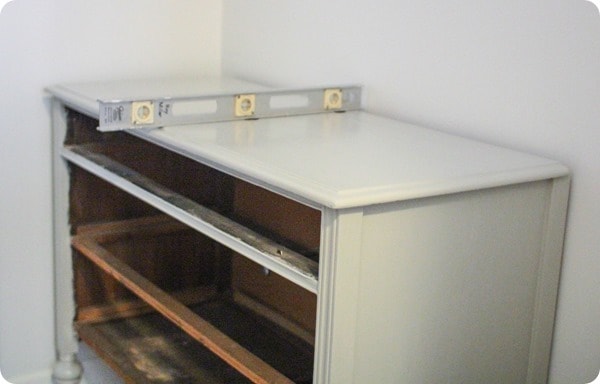
Before adding the sink, I needed to make sure the top of the dresser was level. Of course, this isn't something you have to worry about if you are buying a vanity from a store, but most antique dressers aren't even close to level. In fact, when I checked the top to see how level it was, I got a different reading in every spot I placed the level. Since the main reason it even need to be level is so that the sink will drain correctly, I placed the level right where the drain would be and based everything on that. I checked how level things were from side to side and front to back and then adjusted the height of two of the legs a little more until things were just right.
Cutting holes for the plumbing
The next task: cut holes for the plumbing. Since I was using a vessel sink, I didn't need to cut a hole for the sink itself. The top of the dresser only needed a small hole for the sink drain and another small hole for the faucet. I set the sink on the dresser top where I wanted it to go, making sure it was centered and then simply traced the drain hole onto the dresser top using a pencil. I also placed the faucet where it would go and traced it as well. I don't happen to have a hole saw, so instead I drilled several pilot holes and then connect them using my jigsaw.
I also needed to cut holes for the plumbing under the sink. Typically the water lines for the hot and cold water and the drain pipe all come through the wall into the back of the vanity and a hole needs to be cut in the back of the dresser to accommodate them. Our plumbing setup was a little different than most. When the plumbers replaced all of our old, messed up plumbing during the first part of our bathroom renovation, they needed to move the drain for our bathroom vanity to the floor. Because of this, I cut a small hole in the bottom of my dresser for the drain. I planned to also cut holes in the back of the dresser for the water lines, but it worked better for my particular dresser to just removed the back panel.
Making the back of the dresser flush
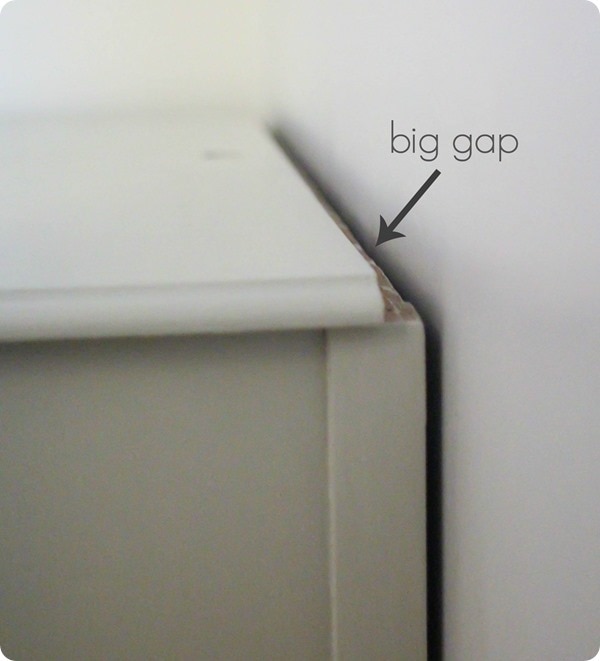
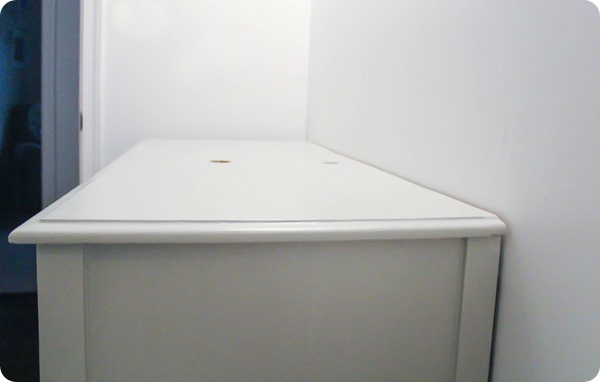
Many antique dressers originally had an attached mirror and an extra space along the back for the mirror to slide into place. This isn't a big problem for just using the dresser without the mirror, but if you are turning the dresser into a vanity, it becomes a bigger problem.
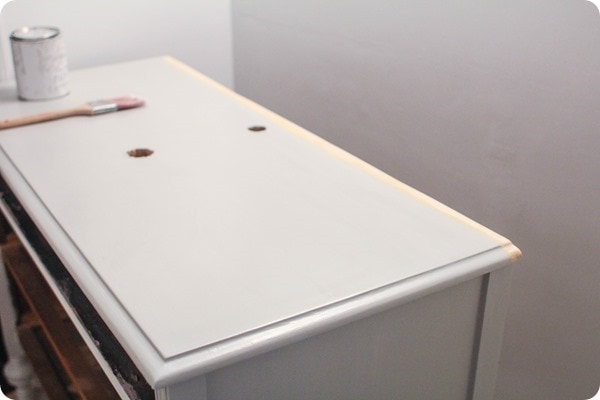
As you can see, I had quite the gap between my dresser top and the wall. I ended up getting a 1 x 2 board, placing it in the gap, and tracing the edge of the dresser onto it. Then I used my jigsaw to cut out the outline. I attached this to the dresser using wood glue and nails and then filled in the gap with some wood filler. I sanded everything smooth and then painted this new addition to blend with the rest of the dresser. (This was one of those points where I wished I hadn't painted the dresser until later in the process!)
Attaching the sink
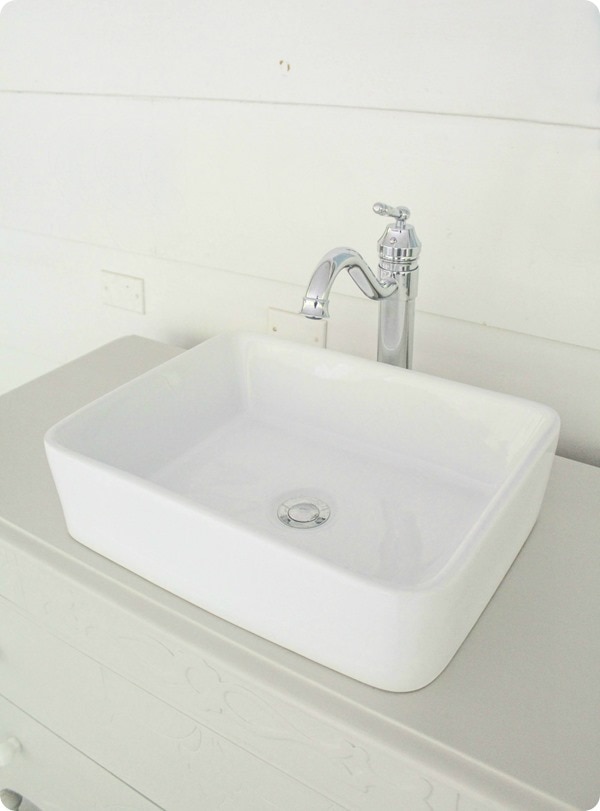
Finally it was time to attach the sink and faucet. (I found both my sink and my faucet for a steal on Amazon and I totally love them.) I attached my sink using a waterproof adhesive making extra sure that everything was straight and lined up with the hole I had previously drilled. Originally I had some trouble with the drain leaking a bit which is a big problem anytime, but especially when you are using a wooden dresser below the sink. I was able to fix the leaking with some simple plumber's putty underneath the drain. Then I attached the faucet using the directions that came with it and reattached all of the plumbing. (Yep, all by myself – it was definitely a proud moment.)
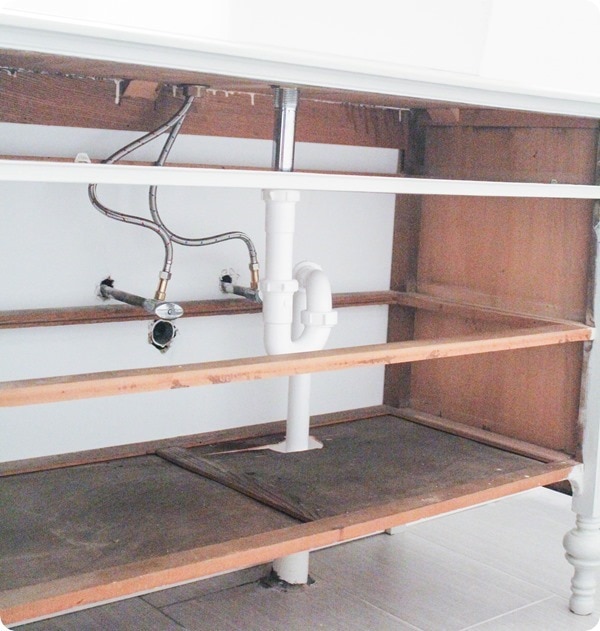
Fixing the drawers
The final step was modifying the drawers to accommodate the new plumbing. I wanted to keep as much usable drawer space as possible, so I carefully marked where each drawer would have to be cut to fit around the plumbing. Again, I used my trusty jigsaw to cut the drawers. (Yep, it's my favorite tool by far).
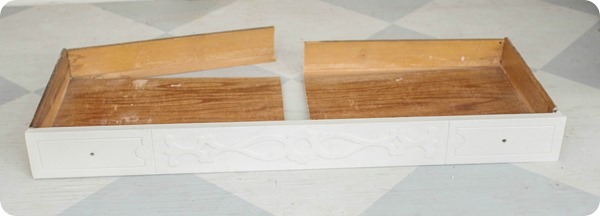
During the cutting process a few of the drawer backs fell apart. I fixed those with some wood glue and then used scrap wood and nails to close off the holes I had cut. That way whatever we store in those drawers won't roll around and fall through the cracks.
I only had to lose a tiny sliver in the center of the top drawer.
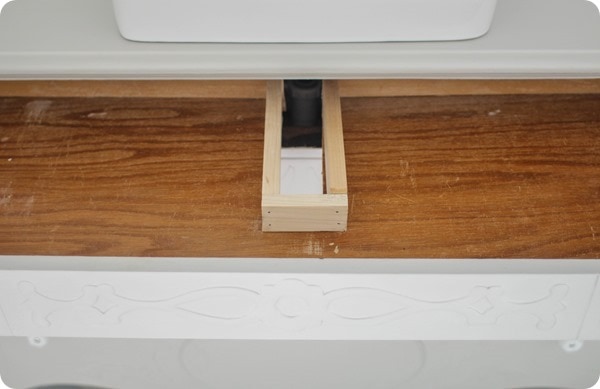
I lost about an 8 inch square from the middle drawer.
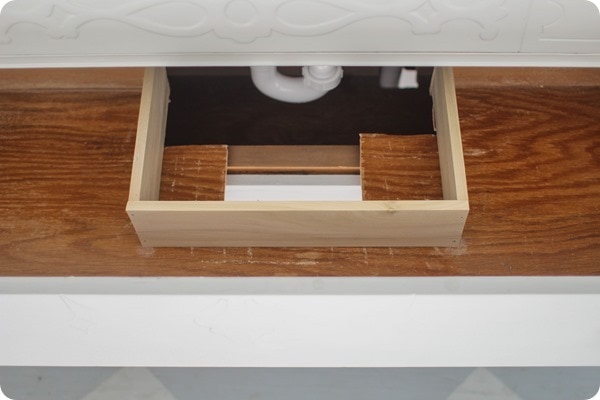
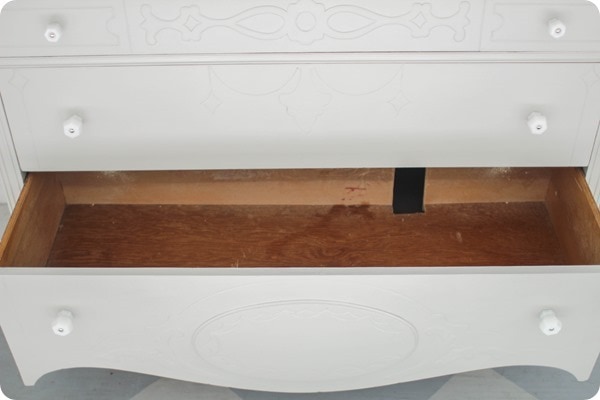
And the bottom drawer only needed the tiniest piece taken off the back. I didn't bother closing this one off since this large drawer will probably hold towels and other large items that wouldn't fit in that little hole. If our plumbing hadn't had to be reconfigured to drain through the floor, I wouldn't have had to modify this drawer at all.
The finished product
And finally, the fun part: putting it all together.
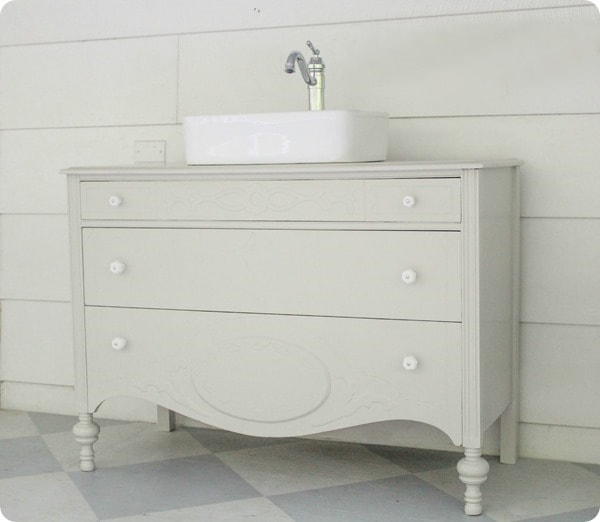
I am ridiculously excited about how this vanity turned out. And to be honest, I'm also pretty darn proud of myself for tackling this project on my own. If you're thinking about making your own bathroom vanity, just know it may not be easy, but you can totally do it.
And it is so worth it in the end.
Check out all the posts related to our DIY bathroom renovation below:
Modern Farmhouse Bathroom Reveal with budget and source list
Vintage Dresser Bathroom Vanity
Working with contractors: A semi DIY bathroom renovation
Cheap and easy board and batten
The cheapest bathroom mirror ever
Installing tile: smart tips for beginners
Choosing the perfect paint color

smithfirldetel1950.blogspot.com
Source: https://www.lovelyetc.com/how-to-make-a-dresser-into-a-bathroom-vanity-the-nitty-gritty/
0 Response to "Cream Dresser Vanity With Double White Vessel Sink"
Post a Comment